
Research & Projects
My current programme has two strands: quantum sensing for particle detection, led by chromatic calorimetry with quantum-dot nanocomposites, and quantum computing for high-energy physics. Both are an extention of my earlier work in precision Standard Model and Higgs physics with CMS and in detector development for CMS and CALICE, which follows below.
Quantum Sensing and Chromatic Calorimetry
The HEP problem. Homogeneous calorimeters measure electromagnetic energy with excellent resolution. However, they record a shower as a single light signal and lose the information on where the energy was deposited along the shower. Depth information helps separate electrons from hadrons, correct for leakage and improve the energy measurement, but it normally requires segmenting the detector into separate channels.
The idea. Chromatic calorimetry encodes shower depth in the colour of the scintillation light. Each depth region of the calorimeter emits at a different wavelength, and a spectrally resolved readout at the back of the module recovers the longitudinal shower profile. Quantum dots are natural candidates for the emitters because their emission wavelength can be tuned through their size and composition. I conceived the concept and lead the project, which is carried out with the CERN Crystal Clear collaboration and within DRD5, where I lead the quantum-dot sub-work-package. Partners include the University of Bern, CTU and IoP Prague and Milano-Bicocca.


Two chromatic-calorimeter layouts studied in the JINST proposal [1]. Left: a homogeneous module with quantum-dot-doped scintillator, whose emission wavelength changes with depth. Right: a sampling variant with thin quantum-dot layers between dense crystals. In both cases a spectrometer at the rear maps wavelength to depth.
Experimental status
The project is being developed in stages, and only the first has been demonstrated experimentally.
- Concept validated with layered scintillators. We stacked conventional inorganic scintillators (GAGG, PWO, BGO and LYSO) in order of emission wavelength and exposed them to electrons and pions of up to 100 GeV at the CERN SPS. The wavelength-resolved readout separated electrons from pions and measured the longitudinal shower development [2] [3]. This shows that colour can carry depth information. It does not yet test quantum dots.
- Quantum-dot design studied in simulation. The JINST proposal [1] gives a conceptual design of a quantum-dot chromatic calorimeter and evaluates its expected performance with detailed simulation, compared with existing calorimeter technologies.
- Nanocomposite modules: the current step. We are building and beam-testing prototype modules with quantum-dot nanocomposite wavelength shifters (2023–2026) and comparing them with Geant4 simulation. First results were presented at IEEE NSS/MIC/RTSD 2025. A full quantum-dot calorimeter has not yet been demonstrated.
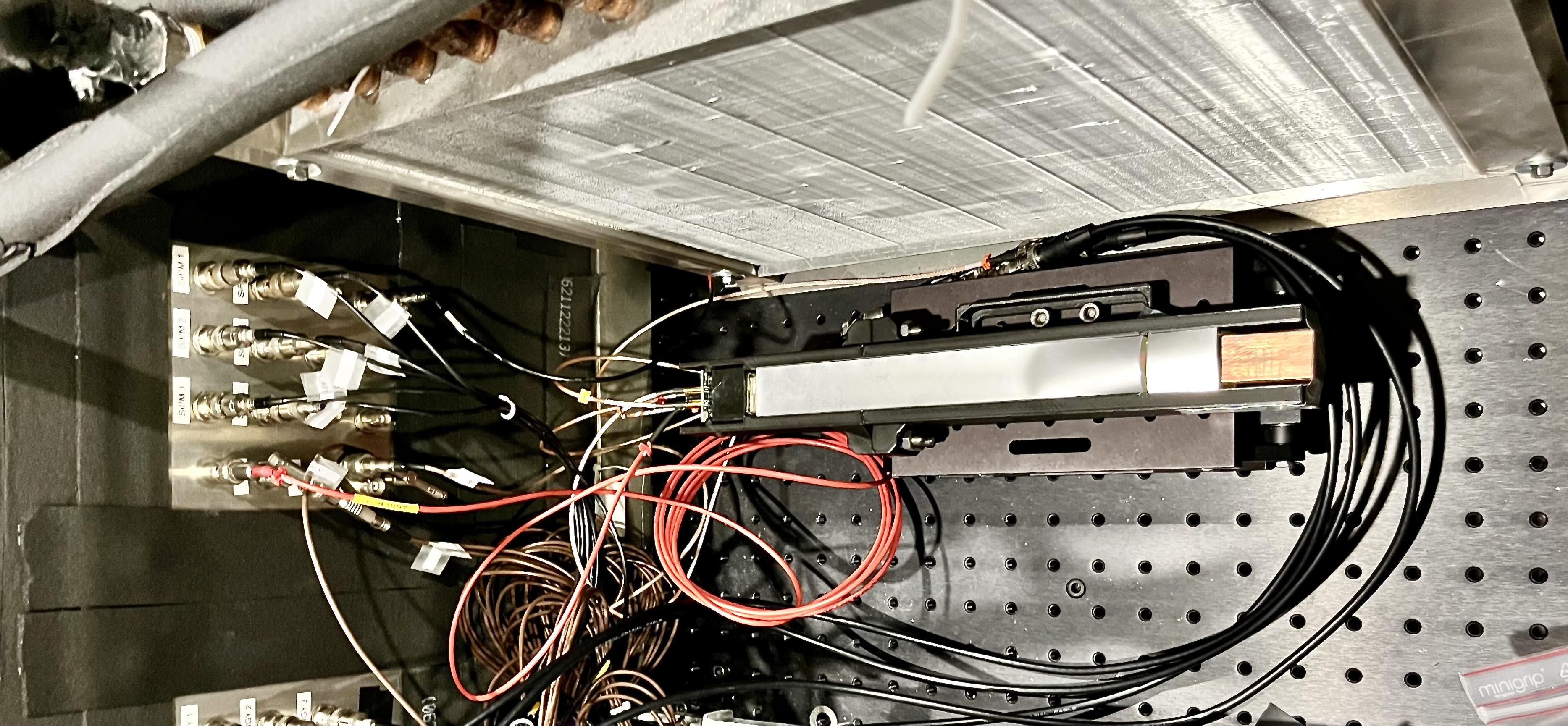
Layered-scintillator prototype in the CERN SPS beam line (2024). The beam test validated the wavelength-based reconstruction of shower depth [3].
Next scientific question. Can quantum-dot nanocomposites give enough light, with little enough self-absorption and sufficient radiation tolerance, to keep the energy resolution of a homogeneous calorimeter while providing depth information? To answer this, we characterise quantum dots and their host matrices in the laboratory: radioluminescence yield, emission spectra, decay times and radiation tolerance. This includes infrared-emitting quantum dots [4] and the choice of photodetector. The same materials are being studied as alternative wavelength shifters for the liquid-argon detectors of DUNE.
Open questions: polarisation and spin-sensitive sensors
Quantum materials offer degrees of freedom beyond colour, such as the polarisation of the emitted light or spin-dependent responses. Whether these can carry useful information about a particle is an open research question; no such capability has been demonstrated. Before such a quantity could become a usable particle observable, we would need to measure:
- whether the signal correlates with a property of the incident particle or shower that intensity, timing and wavelength do not already provide;
- how large that correlation is compared with depolarisation, scattering and fluctuations inside a dense absorber;
- whether the response is stable under irradiation and temperature changes, and reproducible from sample to sample;
- whether a practical readout can record it at the required rate and channel count.
Bedretto underground site
Low-background, low-noise environments are needed to test sensitive quantum sensors. The Bedretto tunnel in Ticino, under more than 1400 m of granite, has been characterised for fundamental-physics experiments [5]. The muon flux is suppressed by six orders of magnitude relative to the surface, which corresponds to roughly 4000 m water equivalent, and the magnetic and seismic noise levels are exceptionally low. I am a co-author of this characterisation paper. The paper establishes the site's scientific potential. An infrastructure proposal for the site has since been approved, and testing of quantum-sensing devices at Bedretto is planned.
Quantum Computing for High-Energy Physics
At the CERN Quantum Technology Initiative I lead a set of projects that take specific bottlenecks of particle physics and reformulate them so that quantum hardware can contribute, and so that we can test whether it gives an advantage. Each project starts from a HEP question rather than from an algorithm. I also co-lead the New Physics stream of the QC4HEP working group (CERN, DESY and the IBM Quantum Network).
Coherent evaluation of collider amplitudes for EFT constraints
Problem. Precision measurements at electron–positron colliders constrain the Standard Model and possible higher-dimensional (EFT) interactions. These constraints rely on computing scattering amplitudes, which is a natural first test for quantum evaluation.
Result so far. We built a hybrid quantum–classical framework that computes leading-order helicity amplitudes for on gate-based hardware. External kinematics are encoded in single-qubit Weyl spinors, and the diagrams are combined coherently in a single circuit. The resulting angular distributions were fitted to precision data. The extracted bounds agree with Standard Model expectations, which shows that quantum-evaluated amplitudes can enter a real phenomenological analysis [1].
Next question. How does the method scale to processes with more diagrams and to loop-level contributions, and at what point does coherent evaluation beat classical evaluation in cost?
QCD splitting functions as quantum circuits
Problem. Parton showers model jets as sequences of QCD splittings but treat them classically, so quantum correlations between the outgoing partons are not represented.
Result so far. We derived the helicity entanglement generated at the gluon-splitting vertex and built a two-qubit circuit that reproduces it while encoding the momentum fraction carried by each gluon. After calibration to LHC jet-substructure data, the composed circuits reproduce measured three- and four-prong momentum-fraction distributions. The three-prong circuit ran on superconducting hardware with results consistent with simulation [2]. A longer explanation is in this post.
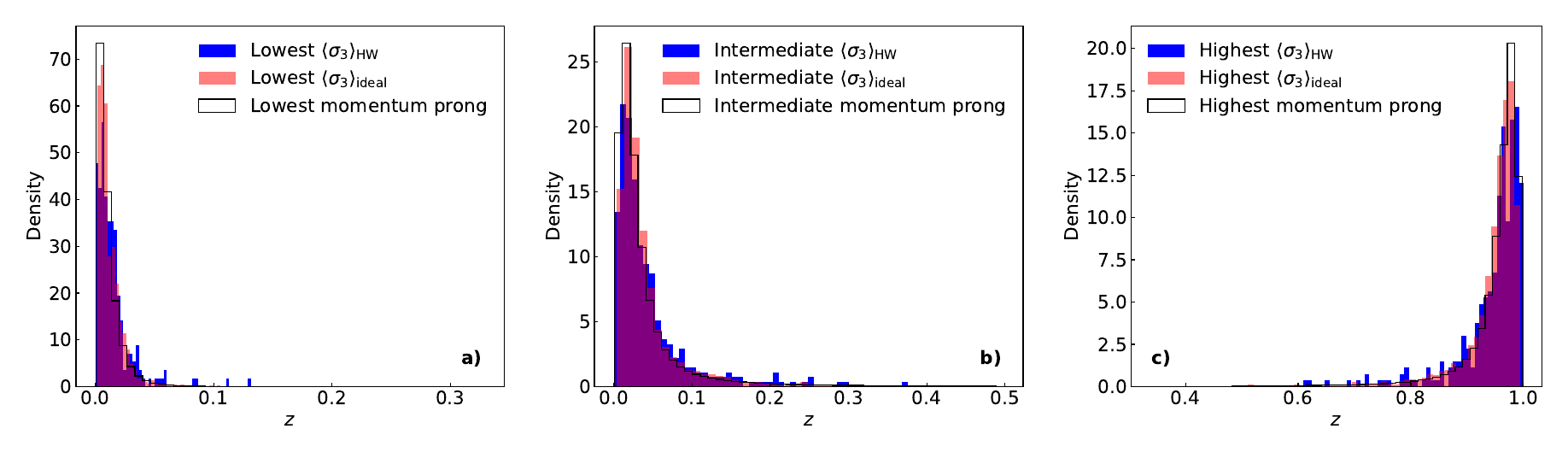
Three-prong momentum-fraction distributions from the splitting-function circuit run on superconducting quantum hardware (blue), compared with ideal simulation (red) and the target distribution (black). The hardware output reproduces the expected shapes [2].
Next question. Can these primitives be composed into a full quantum-native parton-shower module that keeps the right entanglement structure without the circuit depth growing beyond what current hardware can run?
Real-time hadronisation beyond classical approaches
Problem. Hadronisation, in which quarks and gluons form hadrons, is non-perturbative and is described in event generators by phenomenological models. Its real-time dynamics are very hard to compute from first principles with classical methods.
Status. We are studying the real-time evolution of hadronisation with tensor networks and developing Hamiltonian-simulation formulations for quantum hardware. No results have been published yet.
Next question. Which observables of real-time hadronisation can tensor networks still reach, and where does a quantum simulator become necessary?
Quantum generative models: from jets to drug design
Problem. Generative models are used to simulate jets quickly, but classical models need many parameters to capture correlated, high-dimensional distributions.
Result so far. Low-dimensional, fully visible quantum Boltzmann machines can learn distributions usually associated with higher-dimensional classical models, including jet-generation data. The non-commuting terms and the connectivity of the Hamiltonian improve learning [3]. Preliminary quantum-GAN results on jet substructure were presented at ML4Jets 2024.

A fully visible quantum Boltzmann machine can represent distributions generated by higher-connectivity models, whereas a classical Boltzmann machine needs extra hidden units to do so [3].
Transfer. I lead the transfer of these models to drug design with QuantumBasel. A style-based quantum Wasserstein GAN generates molecules in the latent space of a variational autoencoder. Inference was run on a 156-qubit IBM Heron processor, and the results were benchmarked against classical models on the MOSES suite [4].
Next question. For which jet observables does a quantum generative model need fewer resources than a classical one at equal fidelity?
Beyond HEP
As Quantum Computing Advisor to the Open Quantum Institute, I lead an international team, with ESA and Brazilian institutes, that applies quantum machine learning to satellite Earth-observation images to monitor forest degradation in the Brazilian Amazon.
Standard Model properties and rare processes
Data from Run I and Run II LHC have confirmed the predictions of the Standard Model (SM), but have not provided any signs of new physics beyond the Standard Model (BSM). I am convinced that the key to uncovering BSM physics lies in rigorous testing of the SM through precise measurements and the investigation of rare processes. The upcoming phase of the LHC presents an excellent opportunity for such explorations.
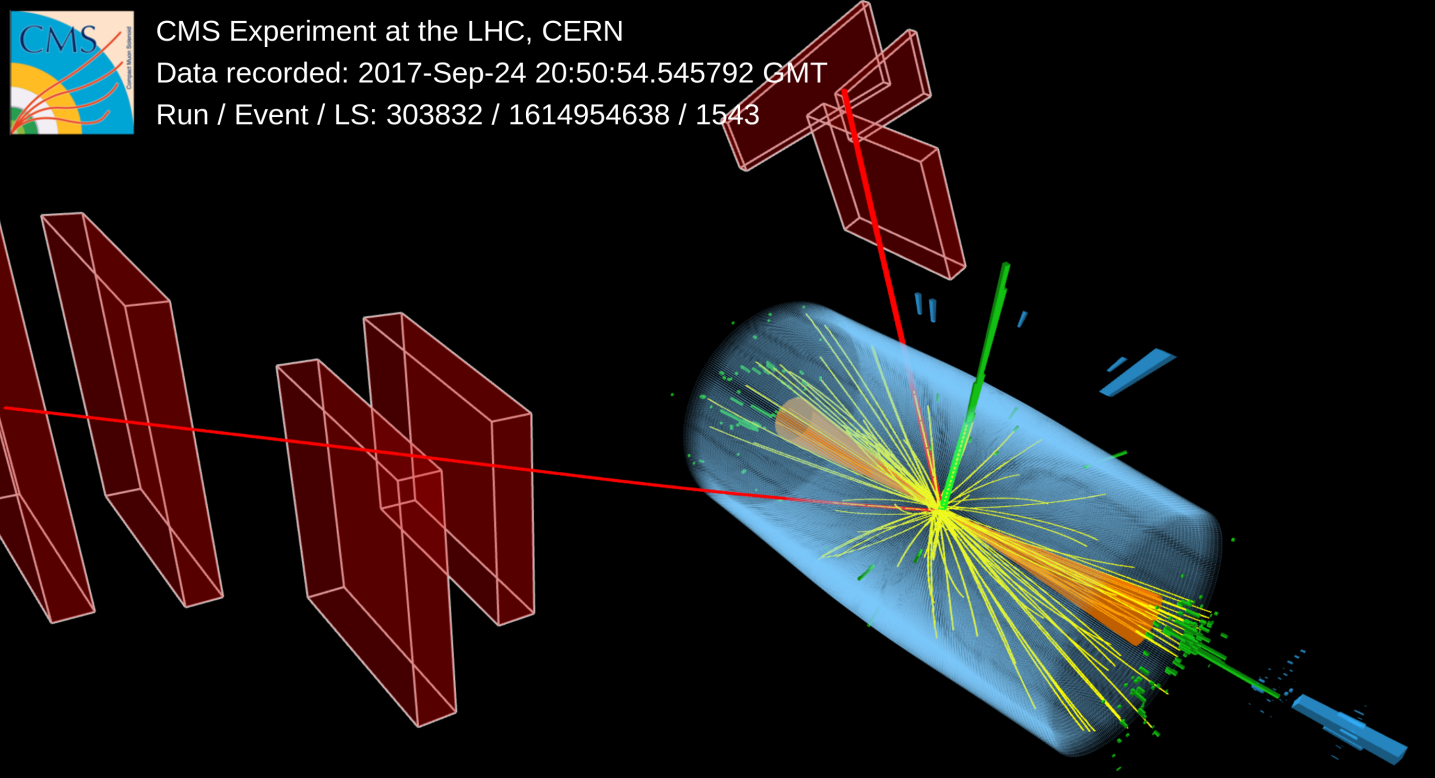
Candidate event in which a W and a Z boson are produced in association with two forward jets. An electron from the decay of the W is represented by the green line (its trajectory) and the green boxes (representing its energy deposit in the electromagnetic calorimeter). The Z decays into two muons, represented by the red lines and the red boxes (representing the muon chambers). The two jets are represented by the orange cones. Event display taken from here.
In this context, Vector Boson Scattering (VBS) and Vector Boson Fusion (VBF) are fundamental predictions of the SM, rooted in the non-Abelian gauge structure of electroweak interactions. While studying Higgs resonances remains a primary avenue for identifying inconsistencies with the SM, VBS processes also offer promising leads. Specifically, Electroweak Symmetry Breaking (EWSB) governs vector boson scattering and prevents issues like unitarity violation and high-energy divergences. Any alterations in the Higgs boson's couplings to vector bosons could disturb this equilibrium, potentially leading to notable increases in VBS rates. This makes VBS an ideal candidate for a model-independent search for new physics.
From 2020 to 2022 I was co-convener of the CMS Standard Model Physics multiboson subgroup (SMP-VV). In that role I oversaw analyses from their inception through the internal review to publication, covering fiducial and differential cross sections, VBS and anomalous-coupling measurements with two or more vector bosons in the final state. From 2022 to 2025 I co-convened the multiboson working group (WG3) of the LHC Electroweak Working Group, and from 2018 to 2025 I served on the CMS internal editorial boards.
I also contributed to two analyses that use Effective Field Theory (EFT) interpretations to search for BSM physics, in the inclusive and VBF ZZ() channels.
Upgrade of the CSC Muon System for the CMS Detector at the HL-LHC
As responsible for the CMS-CSC electronics upgrade (2019–2021), I led the upgrade of the CMS forward muon system's Cathode Strip Chambers (CSC), detailed in [1]. This undertaking, essential for meeting the High-Luminosity LHC (HL-LHC) challenges, involved a comprehensive overhaul of the CSC electronic readout to handle increased particle flux, trigger latency, and rates. I oversaw the replacement of electronic boards in all 180 chambers, focusing on the innermost chambers closest to the LHC beam and coordinating the CSC retrofitting team. This task was complicated by the COVID-19 pandemic, during which I, alongside a small group of dedicated students, led the electronics upgrades and testing amid lockdowns.
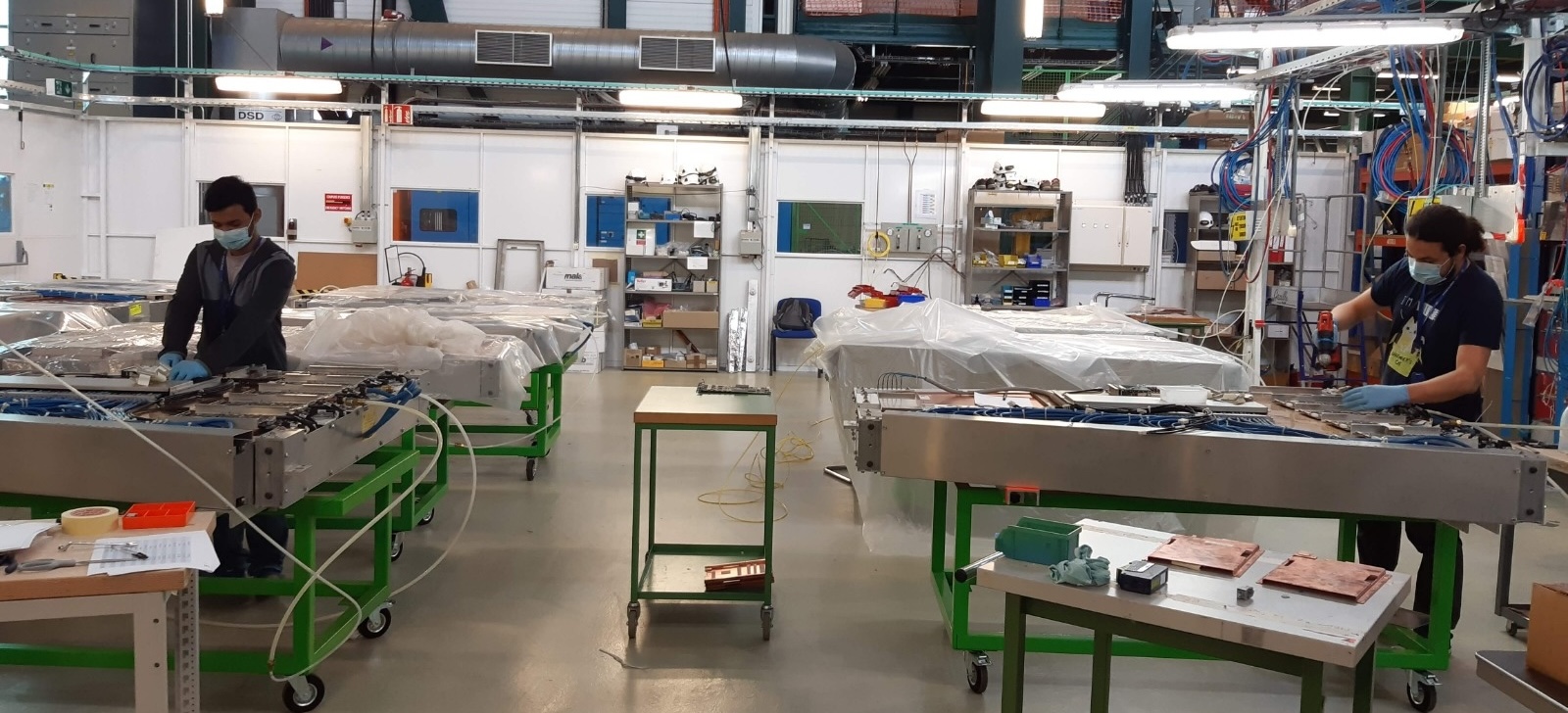
Replacing the on-chamber electronics of the CMS cathode strip chambers with a student during the LHC's second long shutdown.
In 2019, we encountered a significant issue: the optical transceivers on the upgraded on-chamber boards showed signs of overheating. To address this, I designed and tested various copper cover prototypes at CERN's building 904. This process was instrumental in selecting the most effective design to mitigate the overheating problem, ensuring the smooth functioning of the upgraded CSC system in the challenging conditions of the HL-LHC.
After the on-chamber upgrade, I worked on the development and testing of the new CSC Front End Driver (FED), which records data from the CSC and Gas electron multiplier (GEM) subsystems. The new system uses the Advanced Telecommunications Computing Architecture (ATCA) and is designed to handle up to 600 GB/s of data, for a total acquisition rate of 1.3 Tb/s. Until 2025 I tested the prototype X2O board, designed FPGA test stands and wrote high-speed data-acquisition software reaching real-time rates of up to 12 Gb/s. From 2021 to 2024 I was also responsible for the CSC test area at CERN.
Dark Matter Search
From 2018 to 2021, at Northeastern University, I led the CMS search for Dark Matter (DM), which is known to interact gravitationally and possibly weakly with Standard Model (SM) particles, in the Mono-Z channel. The search looks for DM candidates produced in association with a Z boson, that is, for proton-proton collisions in which a Z boson recoils against missing transverse momentum.
Our analysis [1] used data from the CMS experiment, spanning 2016-2018 and corresponding to an integrated luminosity of 137 fb at 13 TeV. The study aimed to explore physics beyond the SM through various theoretical frameworks:
- Simplified DM models featuring vector, axial-vector, scalar, and pseudoscalar mediators.
- Invisible decay channels of a SM-like Higgs boson.
- A two-Higgs-doublet model with an additional pseudoscalar.
In addition to DM-centric theories, alternative models like large extra dimensions and unparticle production are considered due to their potential to produce similar experimental signatures. No deviation from the SM was observed. The results extended the exclusion limits beyond those established by earlier studies, which analyzed partial data samples. Specifically, the extended limits pertain to simplified DM mediators, gravitons, and unparticles. For a SM-like Higgs boson, the analysis set an upper limit of 29% on the invisible branching fraction at 95% confidence level. These limits have since been used in comparisons with direct-detection experiments and in invisible-Higgs studies.
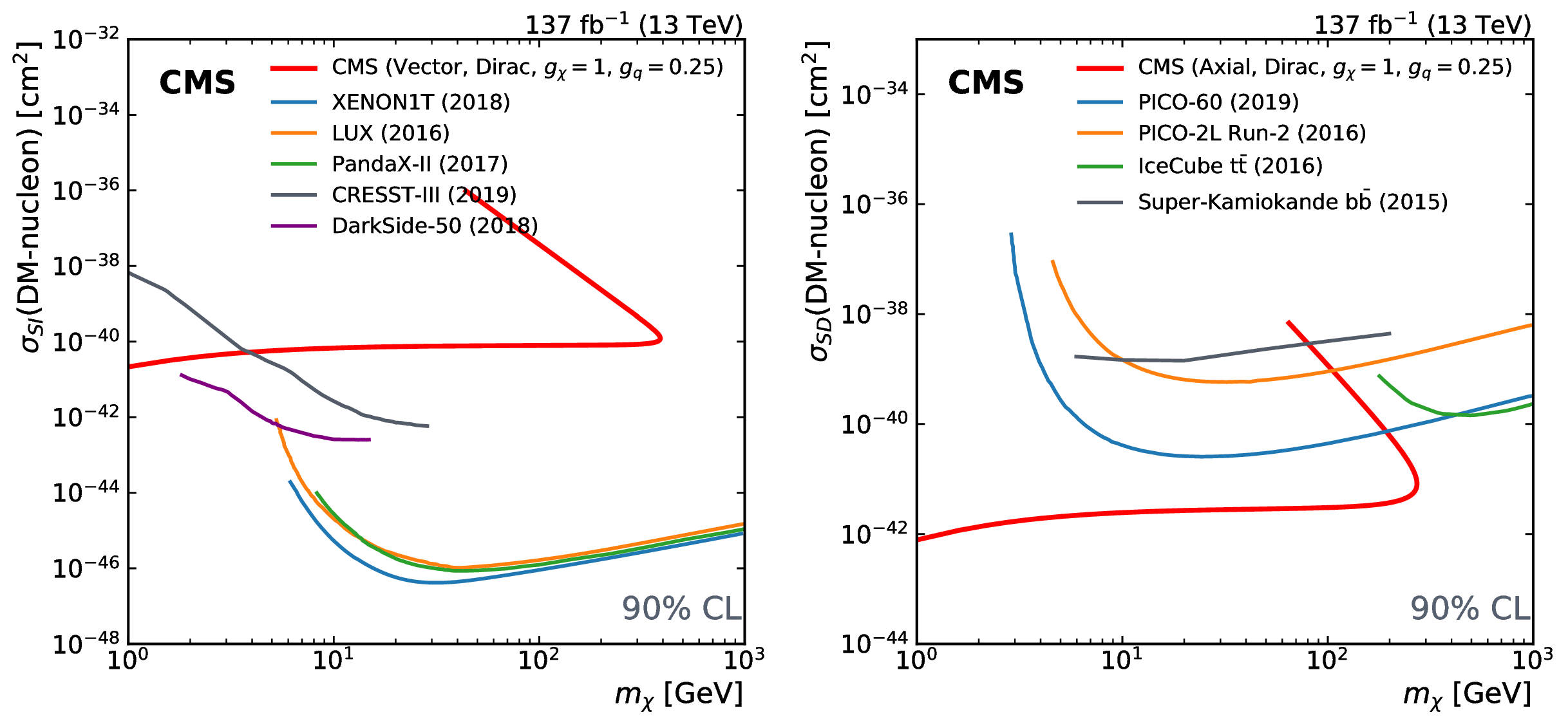
90% CL upper limits on DM-nucleon cross sections for simplified DM models, showcasing both spin-independent (left, with vector couplings) and spin-dependent (right, with axial-vector couplings) cases. Quark coupling is gq= 0.25, DM coupling g_\chi= 1. Includes data from key experiments like XENON1T and LUX (spin-independent), and PICO-60 and IceCube (spin-dependent).
Further, the analysis addresses the two-Higgs-doublet model, probing pseudoscalar mediator masses up to 440 GeV and heavy Higgs boson masses up to 1200 GeV, under specified benchmark parameters. The comprehensive examination of the complete Run 2 dataset in the Mono-Z analysis not only imposes stringent limits on DM particle production across various model types but also facilitates the comparison of these results with direct-detection experiments. This comparison encompasses both spin-dependent and spin-independent scattering cross-sections and extends to constraints on invisible Higgs boson decays, unparticles, and large extra dimensions.
Quark/Gluon tagging for Vector Boson Fusion/Scattering
At Les Houches 2019 [1], I explored the use of quark/gluon (q/g) jet tagging techniques to tag vector boson fusion (VBF) and vector boson scattering (VBS) processes. The jets associated with VBS and VBF processes at leading order are predominantly quark-initiated, so q/g tagging can be instrumental in separating electroweak signals from the continuum of quantum chromodynamics (QCD) backgrounds. It's particularly valuable in Higgs production, aiding both in isolating the Higgs from Standard Model backgrounds and discerning different Higgs production modes, including the separation of gluon fusion and VBF Higgs production.
The methodology explored at Les Houches 2019 involves advanced jet classification techniques, including the use of boosted decision trees and the XGBoost library for machine learning-based analysis. The approach integrates jet-substructure variables such as jet angularities and jet multiplicity, along with event-level kinematic variables. These variables are processed through different models, each trained across various kinematic bins. The strategy effectively employs q/g tagging to differentiate between VBF and gluon-gluon fusion Higgs production, leveraging recent advances in tagging technology and anticipated detector upgrades.
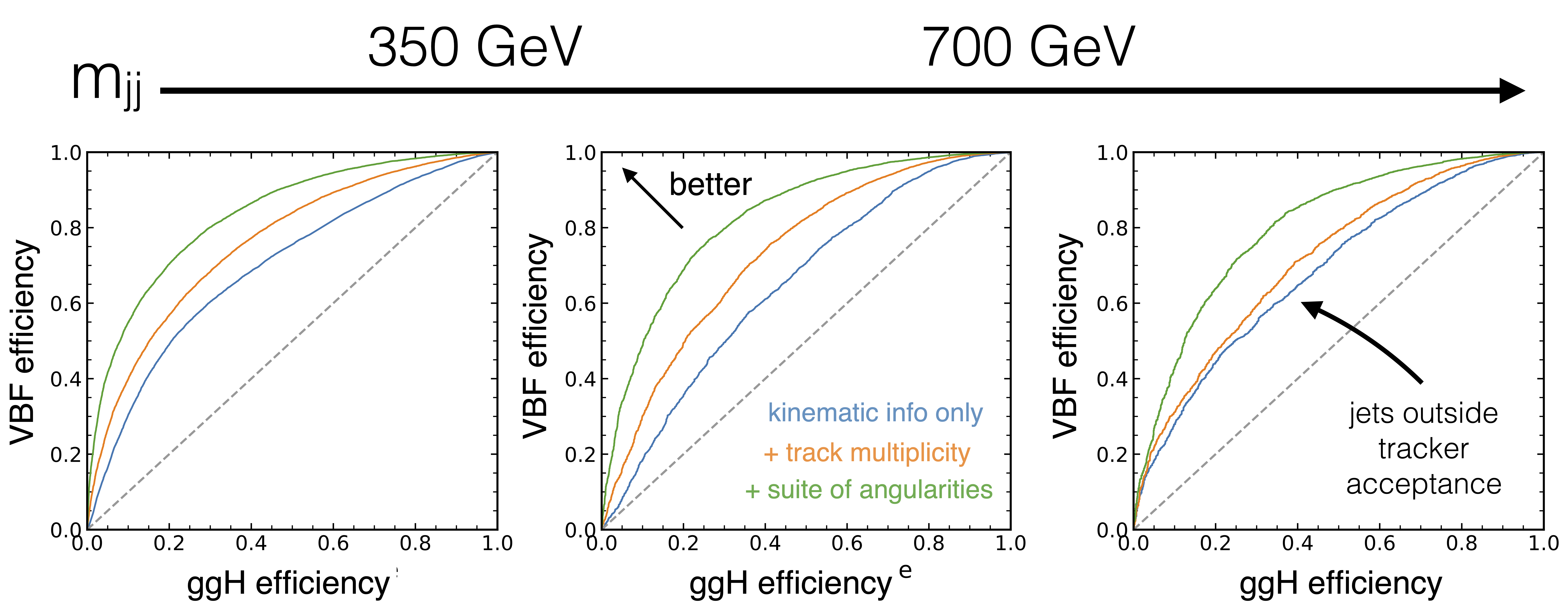
ROC curves for separating VBF Higgs production from ggH Higgs production. The three plots are distinguished by their values, indicated above. The three colored lines in each plot correspond to ROC curves for various levels of information used in the classifiers: jet kinematic information only (blue), additionally including jet constituent track multiplicity (orange), and also including a suite of angularities for the two jets (green)
The study's findings highlight the nuanced interplay between q/g tagging and other event selection criteria. It reveals that adjustments in traditional analysis requirements, such as dijet invariant mass, can optimise the use of q/g tagging. The research demonstrates that while higher dijet mass requirements bias jet distributions to be more forward, there are potential gains in performance by considering simultaneous optimisation of q/g tagging with other variables. This insight paves the way for future research to further explore the correlation between q/g tagging, event kinematic features, and other jet substructure observables.
Simplified Template Cross Sections (STXS)
In our paper [1] titled "Simplified Template Cross Sections - Stage 1.1," we delve into the advancements in the framework of Simplified Template Cross Sections (STXS), an approach adopted by LHC experiments for Higgs measurements. STXS aims to minimise theoretical uncertainties in measurements and allows combining measurements from different decay channels and experiments.
This paper introduces the revised definitions of STXS kinematic bins (stage 1.1), developed in response to insights gained from initial STXS measurements and theoretical discussions. This new stage is designed to be used for the full LHC Run 2 datasets by ATLAS and CMS, with a focus on the three main Higgs production modes: gluon-fusion, vector-boson fusion, and association with a vector boson.
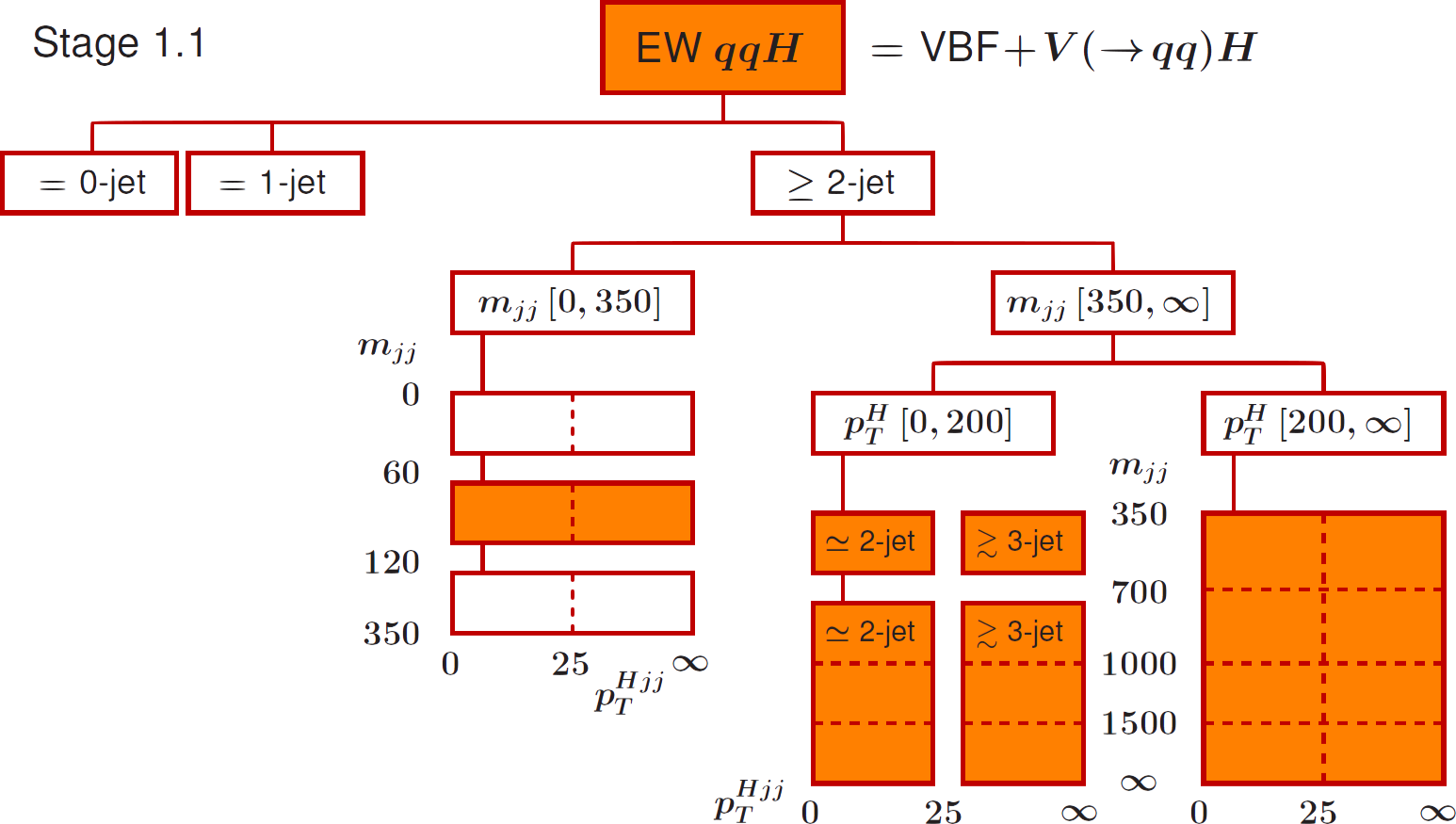
Stage 1.1 binning of electroweak qqH production (VBF and hadronic VH). Events are split by jet multiplicity, dijet mass , Higgs transverse momentum and ; dashed lines mark the optional sub-bin boundaries.
Significantly, we introduced sub-bin boundaries in stage 1.1, aimed at improving the handling of residual theory uncertainties in signal distributions. This granularity, with the inclusion of sub-bins, is expected to surpass experimental sensitivity in the full Run 2 datasets, marking a forward step in precision Higgs measurements.
STXS, defined in mutually exclusive regions of phase space, serve as physical cross sections. The framework's design minimises reliance on theory uncertainties, maximises experimental sensitivity, isolates possible BSM effects, and maintains a manageable number of bins. The definitions for final-state objects in STXS are kept simpler and more idealised compared to fiducial cross-section measurements, allowing for the combination of various decay channels.
Vector Boson Fusion theoretical uncertainties in stage 1.1
Once the stage 1.1 define, the theoritical uncertainties remained to be determined. I have worked with collaborators from ATLAs and CMS to implemented a prescription to assign theoretical uncertainties to VBF production mode in various kinematic regions A framework [2] that is currenltly used by both Atlas and CMS collaborations. This has then become now the LHC Higgs Working Group official recommendation for estimating electroweak Higgs + 2 jets process theoritical uncertainties (checkout this talk to learn more).
Beyond Run 2 and CP-sensitive binning
During Les Houches 2019 [3], I have epxlored with few collegues possible extention to inlude CP senstive bins. In the Standard Model, Higgs interactions preserve CP symmetries, so any deviation signifies potential physics beyond the Standard Model. The Vector Boson Fusion process, a key production channel at the LHC, is especially notable for testing the CP properties of the Higgs due to its distinct kinematic structure with two forward tagging jets.
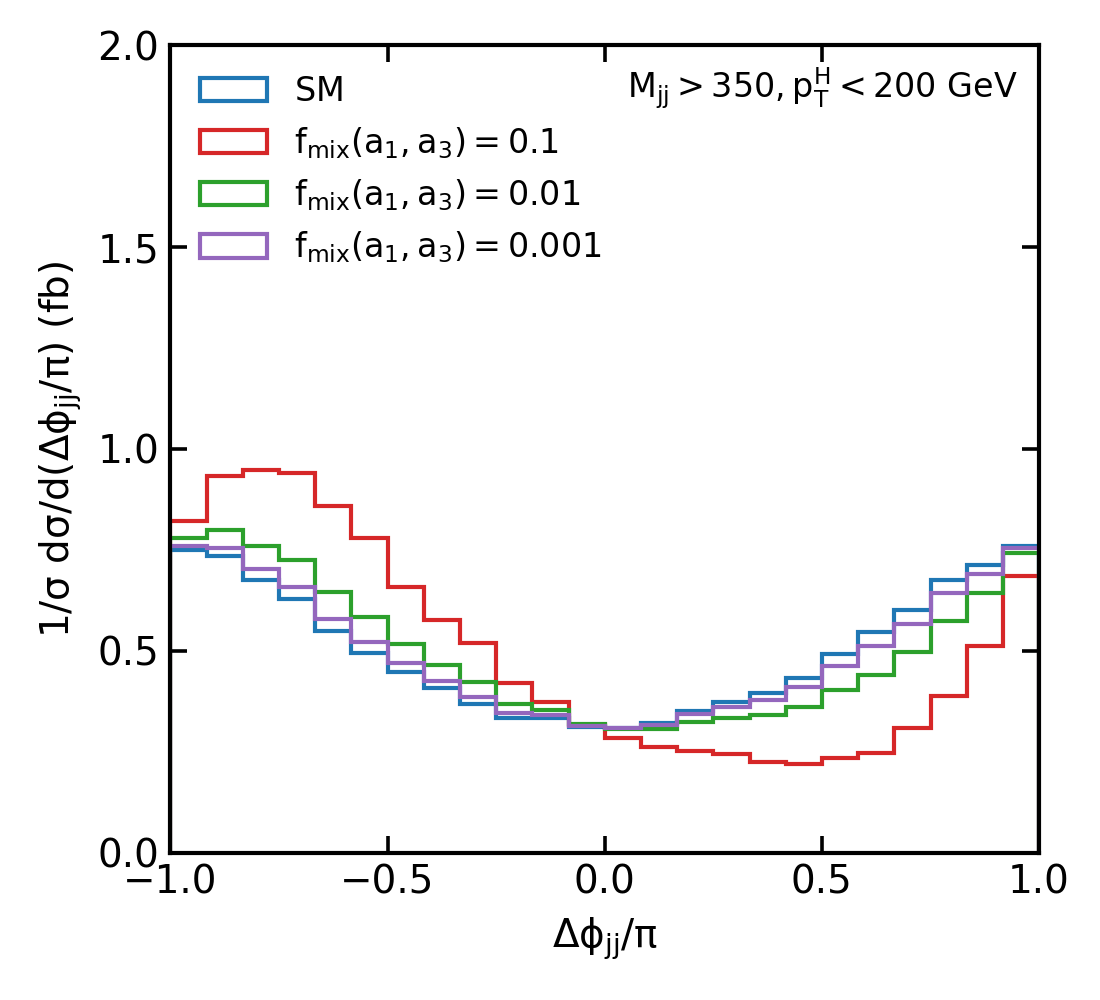
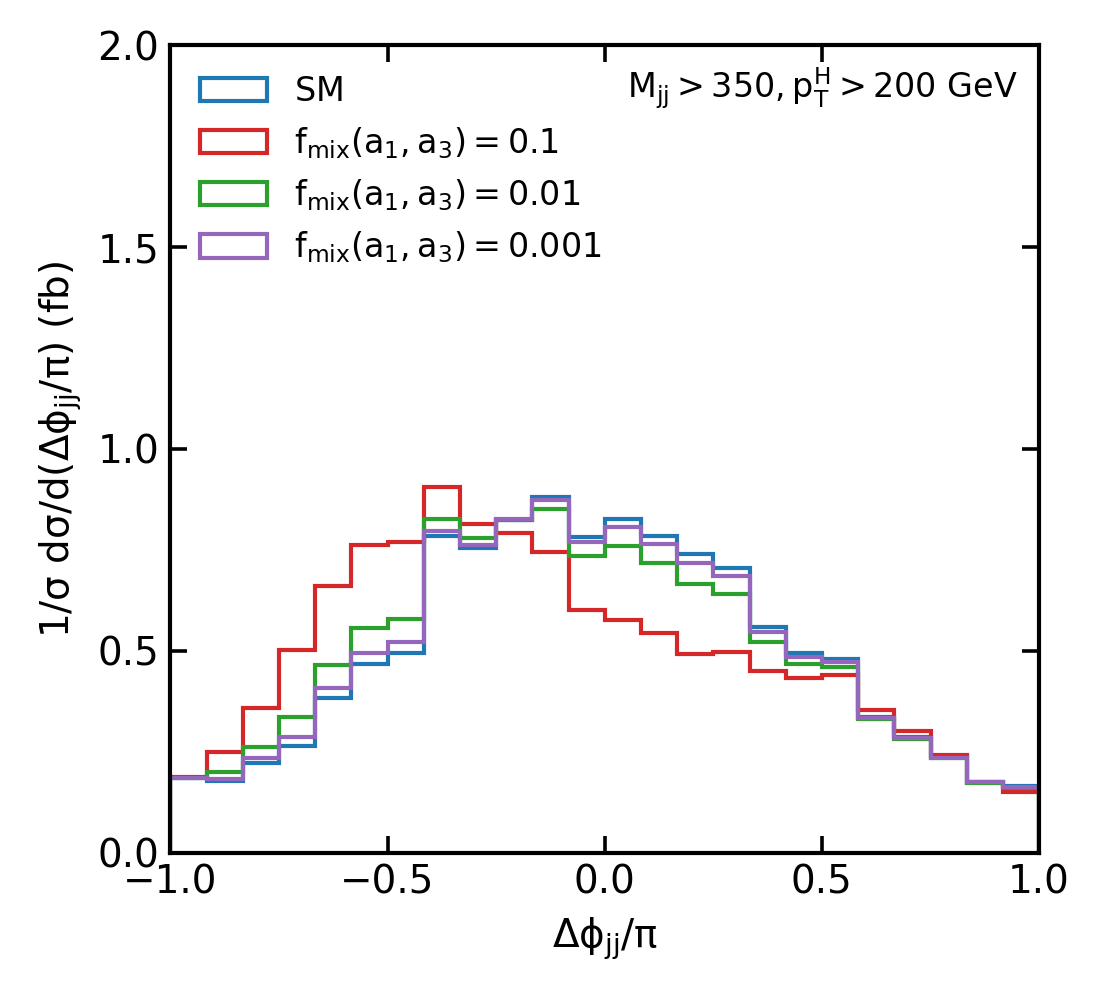
Normalised distributions of the jet-jet signed azimuthal angle difference for various mixed CP scenarios between SM and CP-odd (c, d) couplings. Colours represents different mixing strength values = 0.1%, 1%, 10%.
The study explores the tensor structure of HVV couplings using the azimuthal angle between tagging jets in VBF processes. This angle serves as a critical tool for differentiating CP-even and CP-odd couplings. The study employs the JHUGEN generator interfaced with PYTHIA for simulation, focusing on azimuthal angle distributions to discern CP properties. The Simplified Template Cross Sections framework is refined to include signed azimuthal angle distributions, enhancing the sensitivity to BSM deviations in Higgs boson measurements.
The analysis reveals distinct behaviours in azimuthal angle distributions corresponding to CP-even and CP-odd couplings. Deviations in these distributions would suggest potential CP-violation in the Higgs sector. The study proposes new CP-sensitive binning strategies for azimuthal angle distributions in VBF processes, facilitating a more nuanced understanding of the HVV coupling and CP properties of the Higgs boson. This approach could significantly impact future LHC measurements, offering a refined method to probe for new physics.
Higgs properties in diphoton decay channel
From 2014 to 2018, after joining the CMS collaboration, I worked on measurements of the Higgs boson's properties in the diphoton decay mode. This choice was driven by the pivotal role of this process in the Higgs boson's discovery in 2012. The diphoton decay mode is characterized by its exceptional mass resolution and effective background control, making it an ideal channel for precise measurements of the Electroweak Symmetry Breaking (EWSB) mechanism. I was lead analyser for the VBF channel and the overall statistical analysis of the first results from 13 TeV LHC collisions [1].
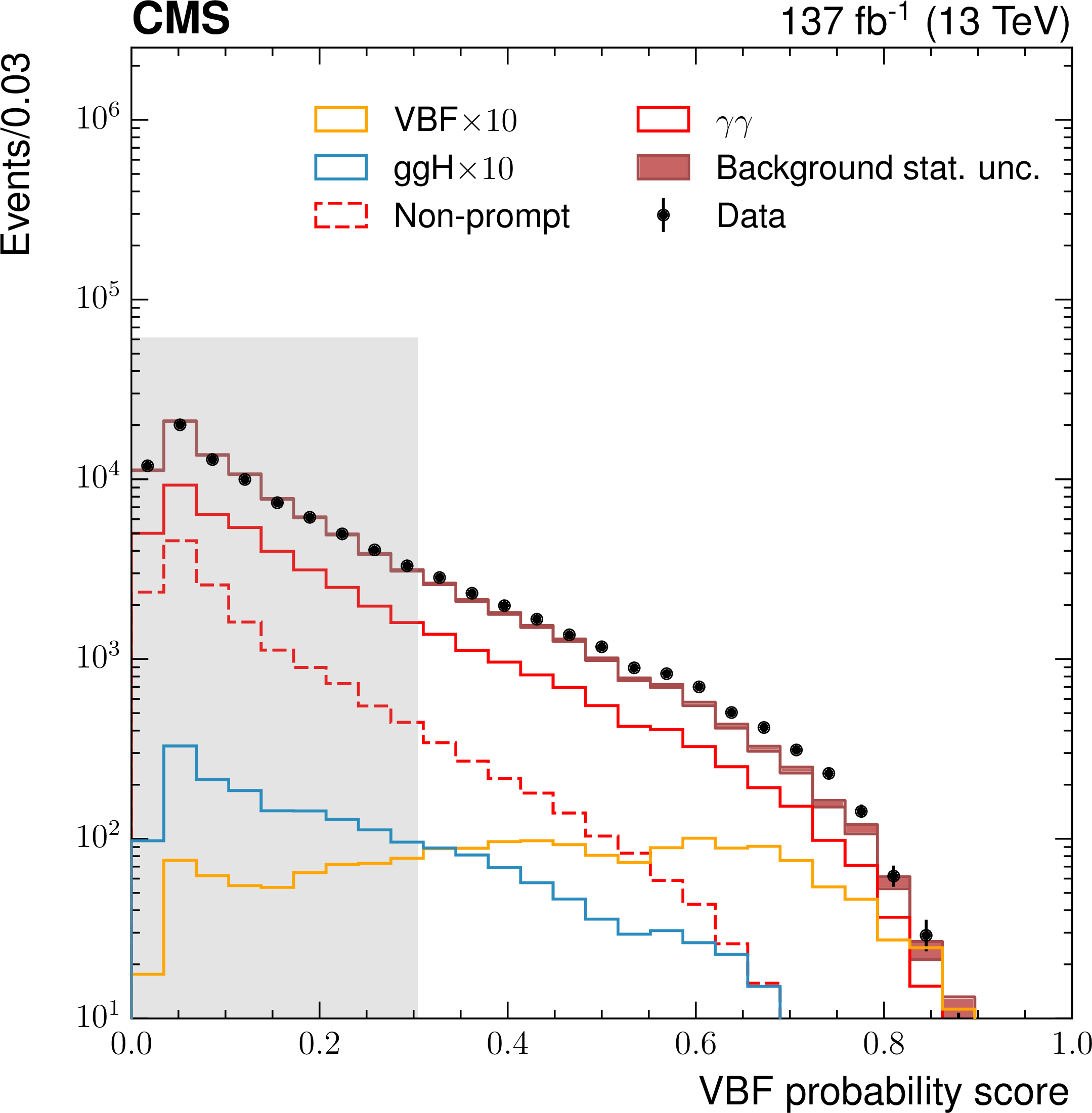
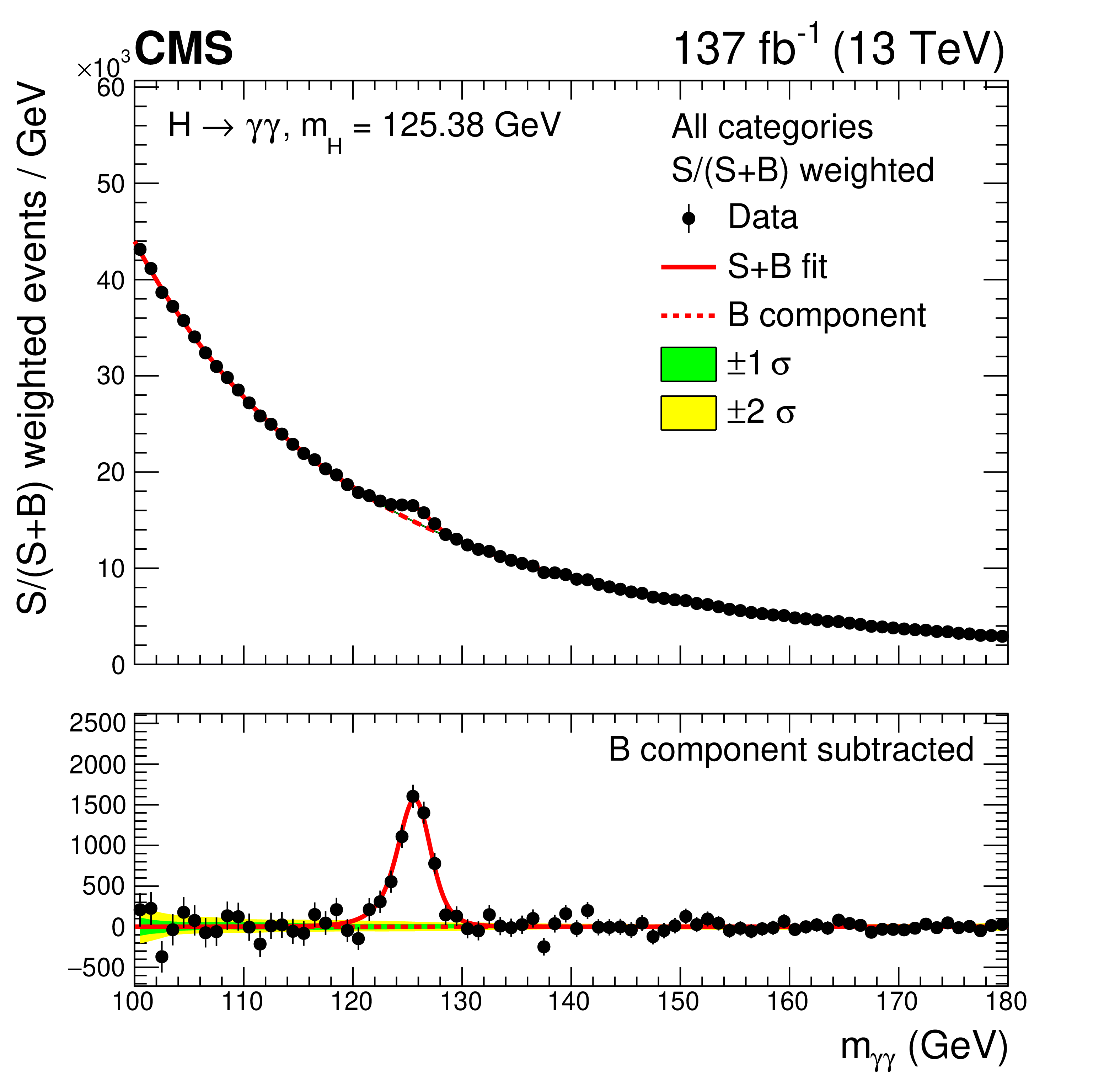
I also focused on the Vector Boson Fusion (VBF) process, the second-most prevalent mode of Higgs boson production at the LHC. VBF's unique kinematics, marked by two tagging jets in opposing directions and small angles relative to the central signal decay products, render it a highly sensitive channel for studying Higgs boson properties. I introduced modern machine-learning-based (ML) classification algorithms, which improved training speed and tagging performance compared with the methods used previously. They also improved background rejection and reduced gluon-gluon fusion contamination, thereby improving the control over associated theoretical uncertainties [2][3][4].
Software digitiser for highly granular gaseous detectors
In the paper [1], we addressed the need for advanced digitisation in calorimeters equipped with gaseous sensors, particularly for calorimeters with a large number of channels (Highly granular or imaging calorimeters). In this paper we propose a method to simulate the pad response in calorimeters, which is crucial step for accurately mimicking the energy deposited by charged particles inside the detector as serves as a complementary plugin to general purpose simulation like Geant4.
The digitisation process involves replicating pad responses to energy deposits, determining induced charges for each pad, and accounting for charge sharing between neighbouring pads. This method was applied to Glass Resistive Plate Chambers (GRPC) and MicroMegas detectors, with the validation done using test beam data to reproduce parameters like efficiency, multiplicity, and mean number of hits at varying thresholds with high accuracy.
The digitisation of the high granular gaseous detector involves several key steps:
- Charge Determination: For each simulated hit from the GEANT4 simulation, the induced charge is randomly assigned following the induced charge spectrum probability distribution.
- Charge Distribution: This charge is then distributed to pads based on the position of the GEANT4 hit. The fraction of charge attributed to a pad depends on the detector specifics and pad size.
- Threshold Determination: A pad is considered "fired" if the induced charge is above a certain threshold set for that pad.
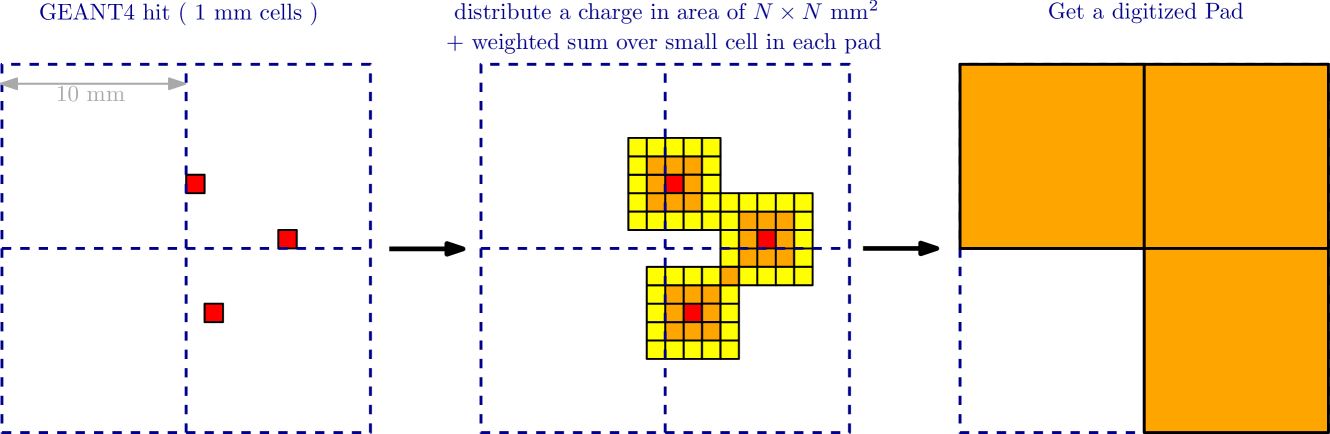
Schematic description of the working principle of the digitizer. A matrix of of cell with corresponding weight is created around the simulated cell (GEANT4 hit). A weighted sum is calculated for each pad (bounded by the dashed lines). The digitized pads are the ones which reach the threshold.
This procedure aims to replicate the pad response to energy deposits accurately, which is crucial for realistic simulations in particle detectors like GRPC and MicroMegas. The method effectively models sensor and electronic responses, allowing for more precise simulations in particle physics research.
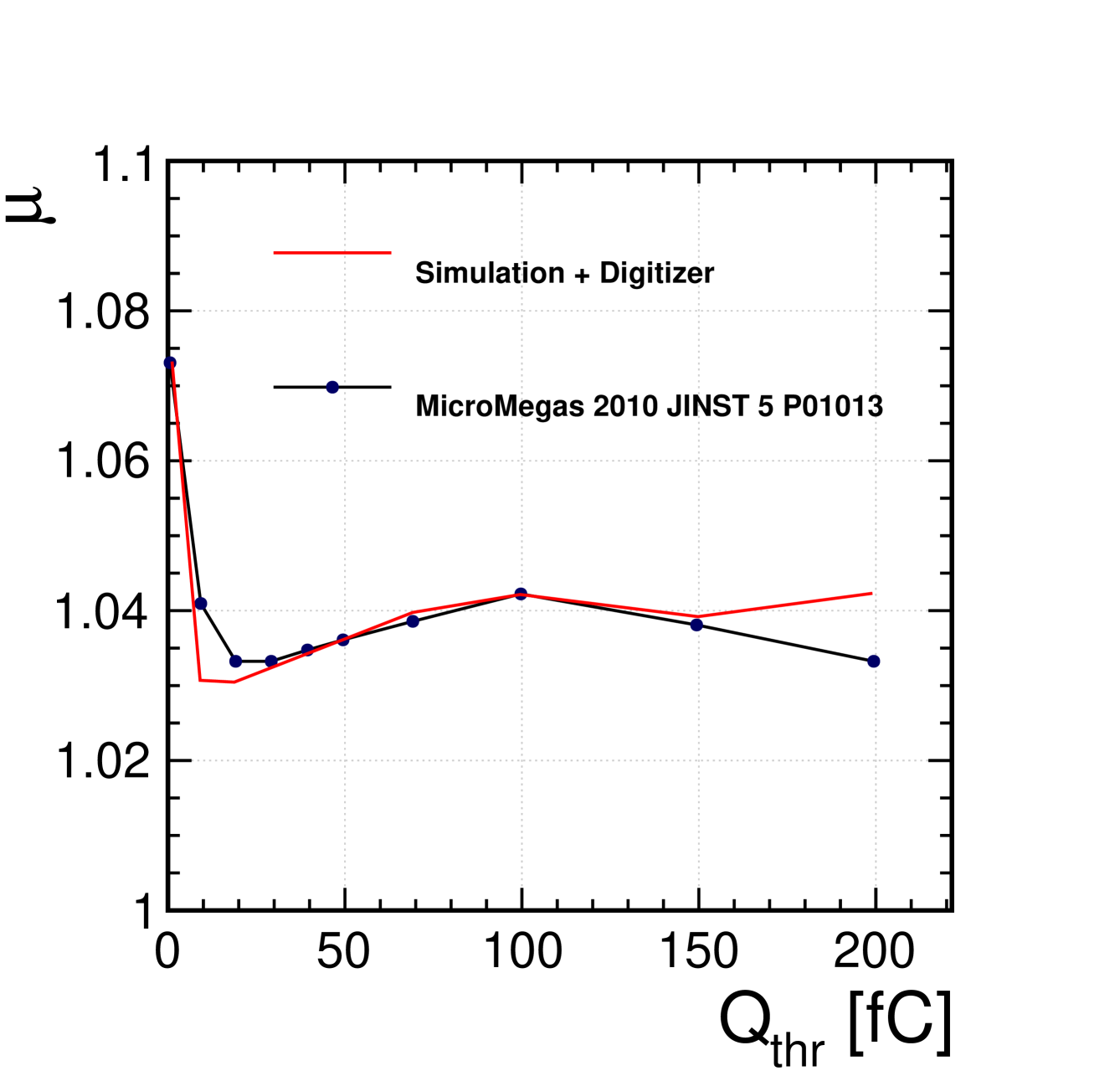
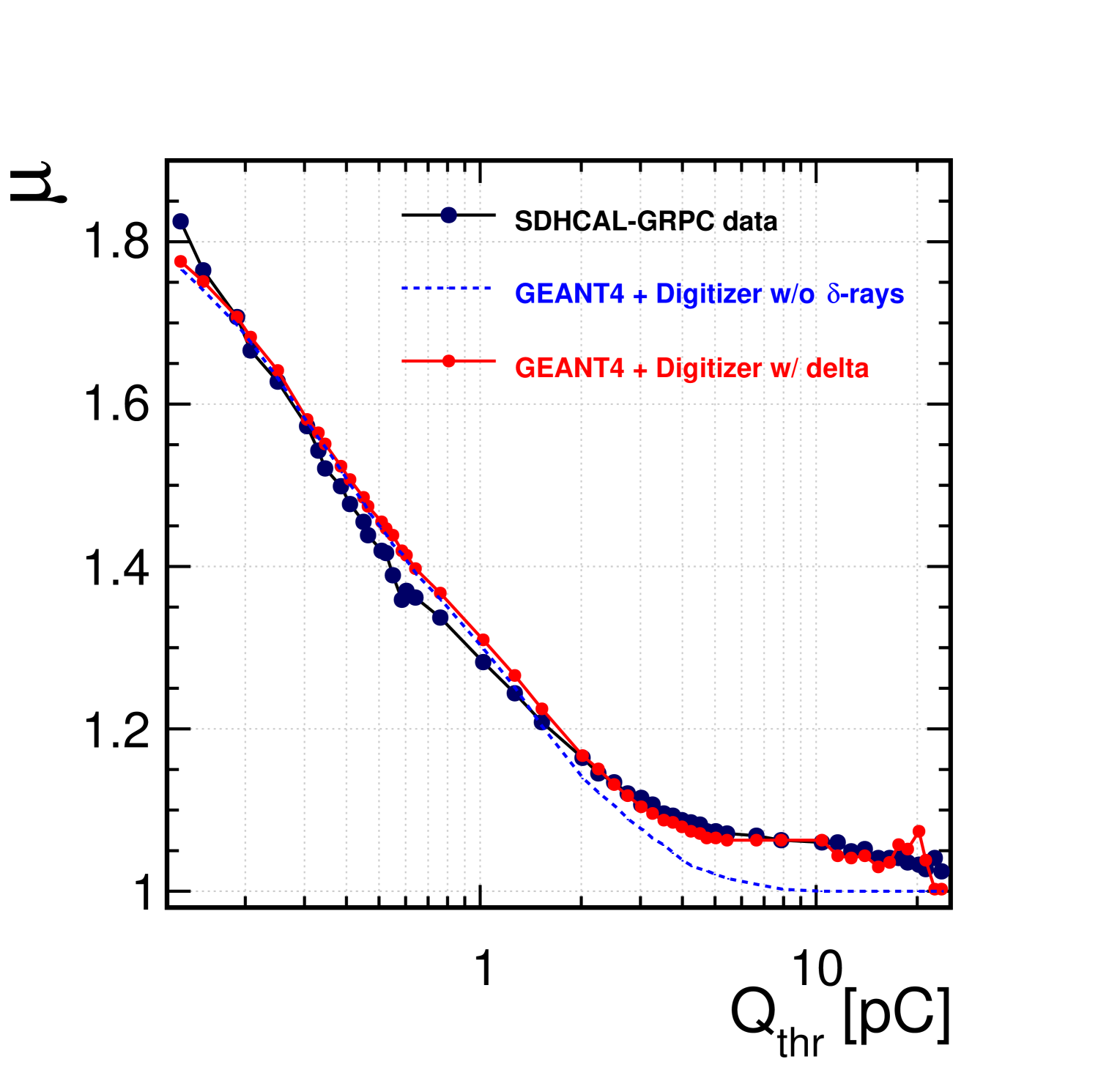
Multiplicity of MicroMegas and GRPC versus detection threshold. The red and the black lines represent the simulation (GEANT4 + digitizer) and measured sensor data. The dashed blue line represents the use of the digitizer without including the -rays effect.
In a followup paper [2] titled "Resistive Plate Chamber Digitisation in a Hadronic Shower Environment" we concentrated on simulating the prototype's response using a different digitisation algorithm called SimDigital, to convert simulated energy deposition into semi-digital information. Unlike the previous algorithm, this approach does the integration charge distribution to share an amplitude to each pad. The results show good agreement with hadronic shower data up to 50 GeV, but discrepancies at higher energies suggest that proton contamination doesn't fully explain the variance between data and simulation at these energies. Although this method could be more accurate, when it comes to simulating even higher number of channels, the previous method might have an advantage as it has the potential to be parallelised without doing analytical integration.
High Rate Resistive Plate Chamber for LHC detector upgrades
The bakelite resistive plate chambers (RPCs) used as muon detectors at the Large Hadron Collider (LHC) experiments have inherent limitations in detection rate restricted their deployment in high rate regions of both CMS and ATLAS detectors. Addressing this challenge, we have explored an innovative alternative: RPCs constructed with low resistivity glass plates, specifically at a resistivity of . Preliminary tests we have conducted at DESY provided promising results [1], indicating that these detectors could operate at a few thousand Hz/cm^2 while maintaining an efficiency greater than 90%.
The underlying mechanism of the Glass RPC (GRPC) detector is rooted in the ionisation produced by charged particles traversing a gas gap. This gap, precisely 1.2 mm, is filled with a specialised gas mixture comprising 93% TFE (CF), 5% CO, and 2% SF. When subjected to a high voltage ranging between 6.5 kV and 8 kV, the system ensures charge multiplication in an avalanche mode, achieving a typical gain of 107107. The standout feature of this detector is the doped silicate glass's low resistivity, a marked improvement from the typical of float glass. To capture the signals, copper pads were employed, which then interfaced with a semi-digital readout system.
To rigorously assess the performance of these RPCs, an extensive test was set up at DESY in January 2012. Utilising the DESY II synchrotron, known for its electron beam with energies up to 6 GeV and a maximum particle rate of 35 kHz, the team could simulate real-world conditions. To measure the beam rate, two scintillator detectors were strategically positioned upstream of the main detector. Additionally, a GRPC made with standard glass was integrated into the experimental setup, serving both as a control and a benchmark.
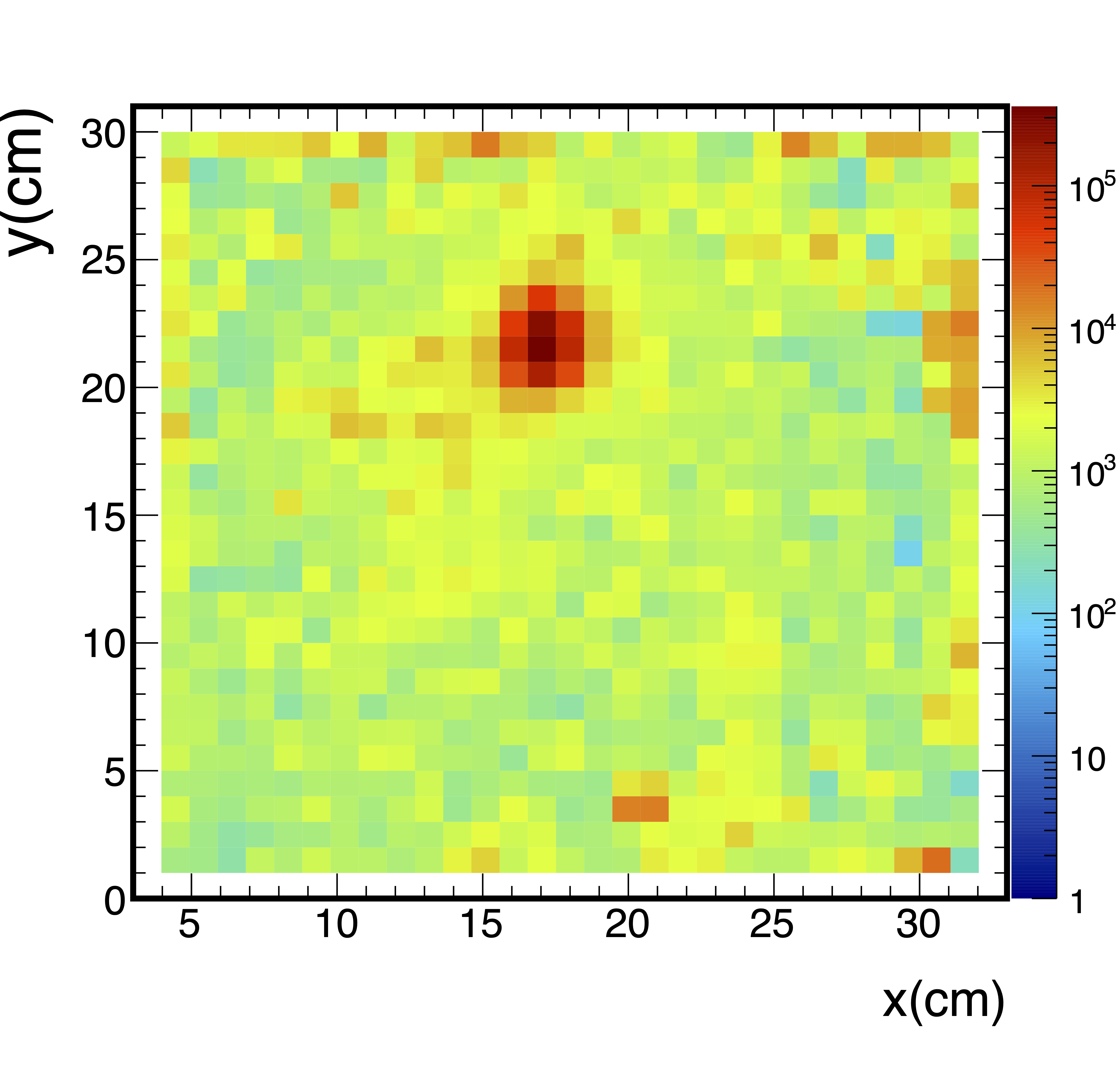
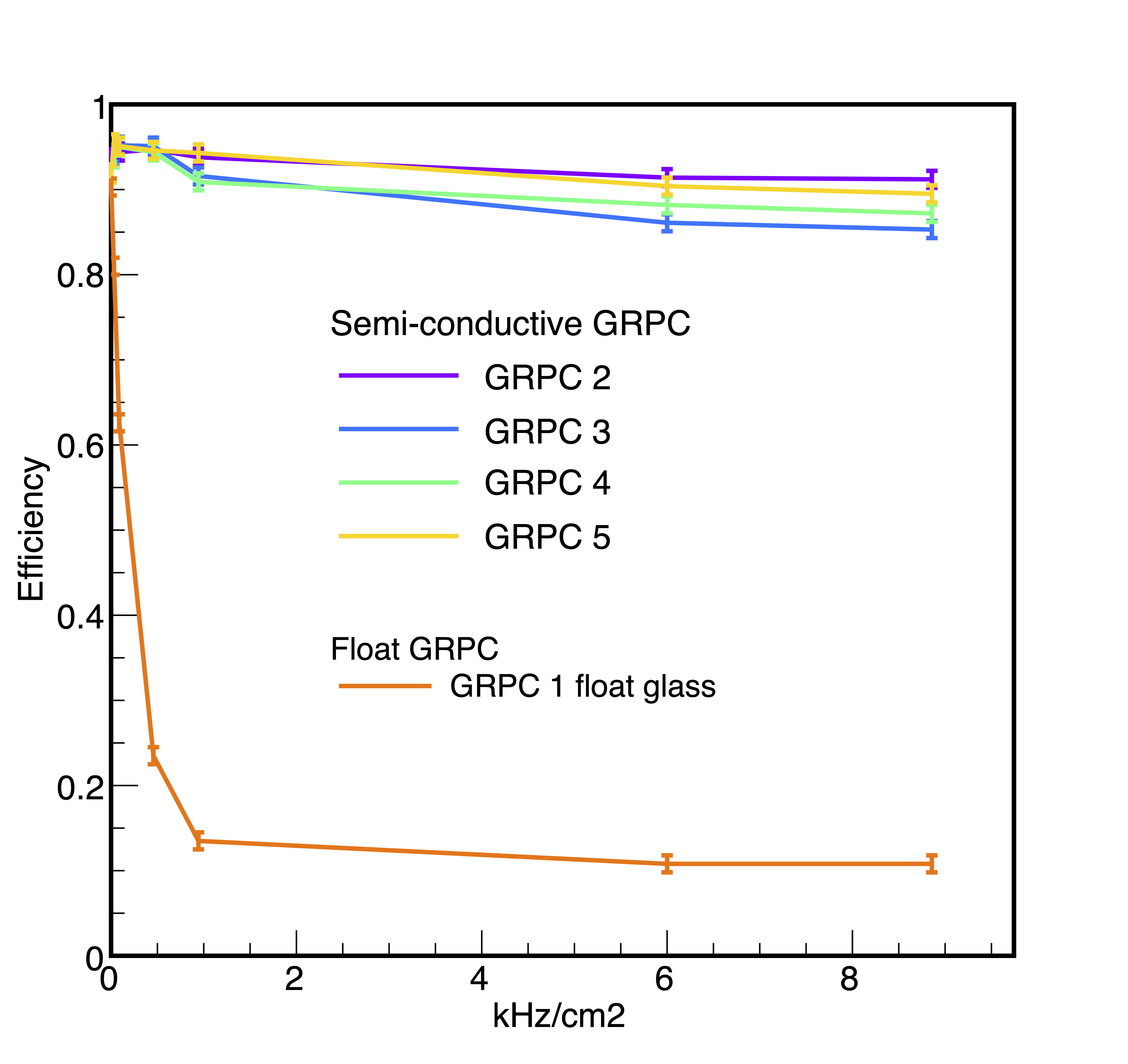
The outcomes of these tests were illuminating. Local efficiency and multiplicity of the GRPC were meticulously measured. The efficiency, representing the fraction of tracks with a multiplicity greater than or equal to 1, and the multiplicity, defined as the number of fired pads within 3 cm of the expected position, were both evaluated against the polarisation high voltage. With the scintillator detectors' data, the team derived the total particle flux, subsequently calculating the rate per unit area. These empirical findings underscored the potential of the GRPC, heralding a new era for muon detectors in high-energy physics experiments.
High granularity Semi-Digital Hadronic Calorimeter: SDHCAL
The idea of the Semi-Digital Hadronic Calorimeter (SDHCAL) originated from the need for highly granular calorimeters in future high-energy physics experiments, such as those proposed for the International Linear Collider (ILC). The goal was to design a calorimeter capable of precise energy measurement of jets, integrating tracking capabilities essential for Particle Flow Algorithms (PFA). The SDHCAL was built as a sampling calorimeter with 48 active Glass Resistive Plate Chambers (GRPC) layers incorporating embedded readout electronics. Its innovative design focuses on high granularity, compactness, and efficient power consumption. The GRPCs were constructed with glass plates, resistive coating, and a unique gas distribution system to enhance performance. I worked on this project from its early stages, and it was the subject of my PhD thesis.

The SDHCAL's operation is characterised by its three-threshold (semi-digital) readout system. The thresholds are designed to distinguish pads crossed by varying numbers of charged particles, enhancing hadronic shower energy measurements. The HARDROC ASICs used in the readout process auto-trigger and store data, ensuring detailed tracking and efficient data acquisition. The prototype was extensively tested at CERN's Super Proton Synchrotron (SPS) with different beams (pions, muons, and electrons) to evaluate its performance under varied conditions. These test beams were crucial for assessing the SDHCAL's efficiency, linearity, and response to hadronic showers.
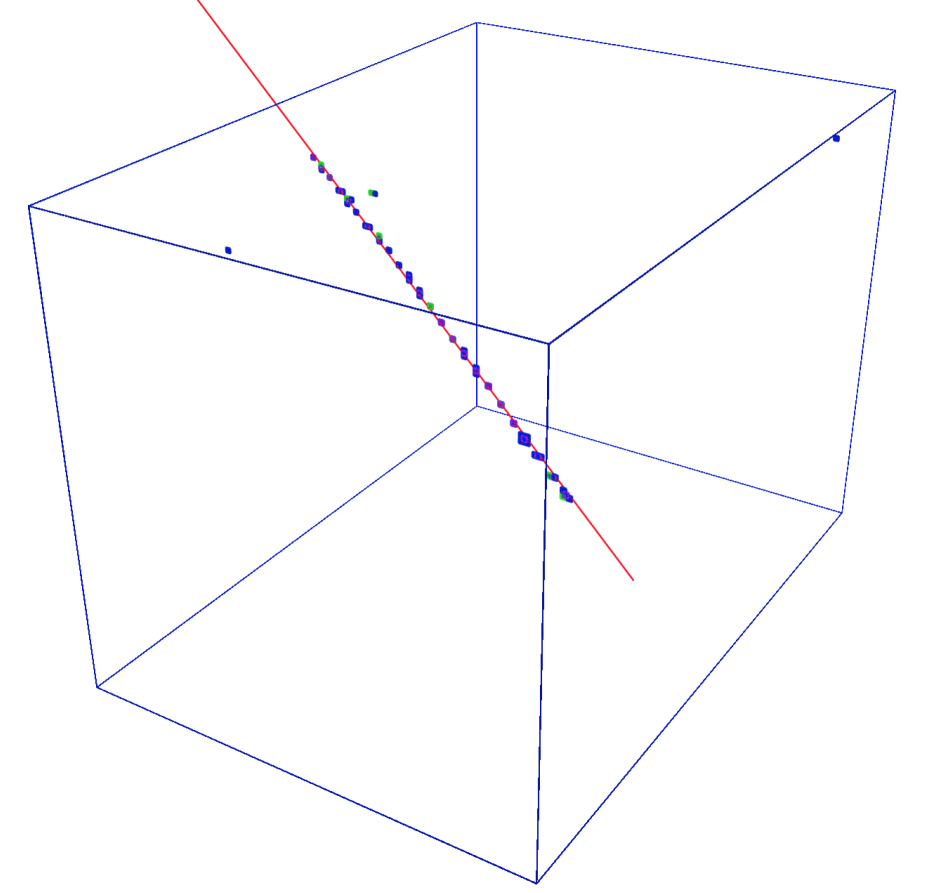
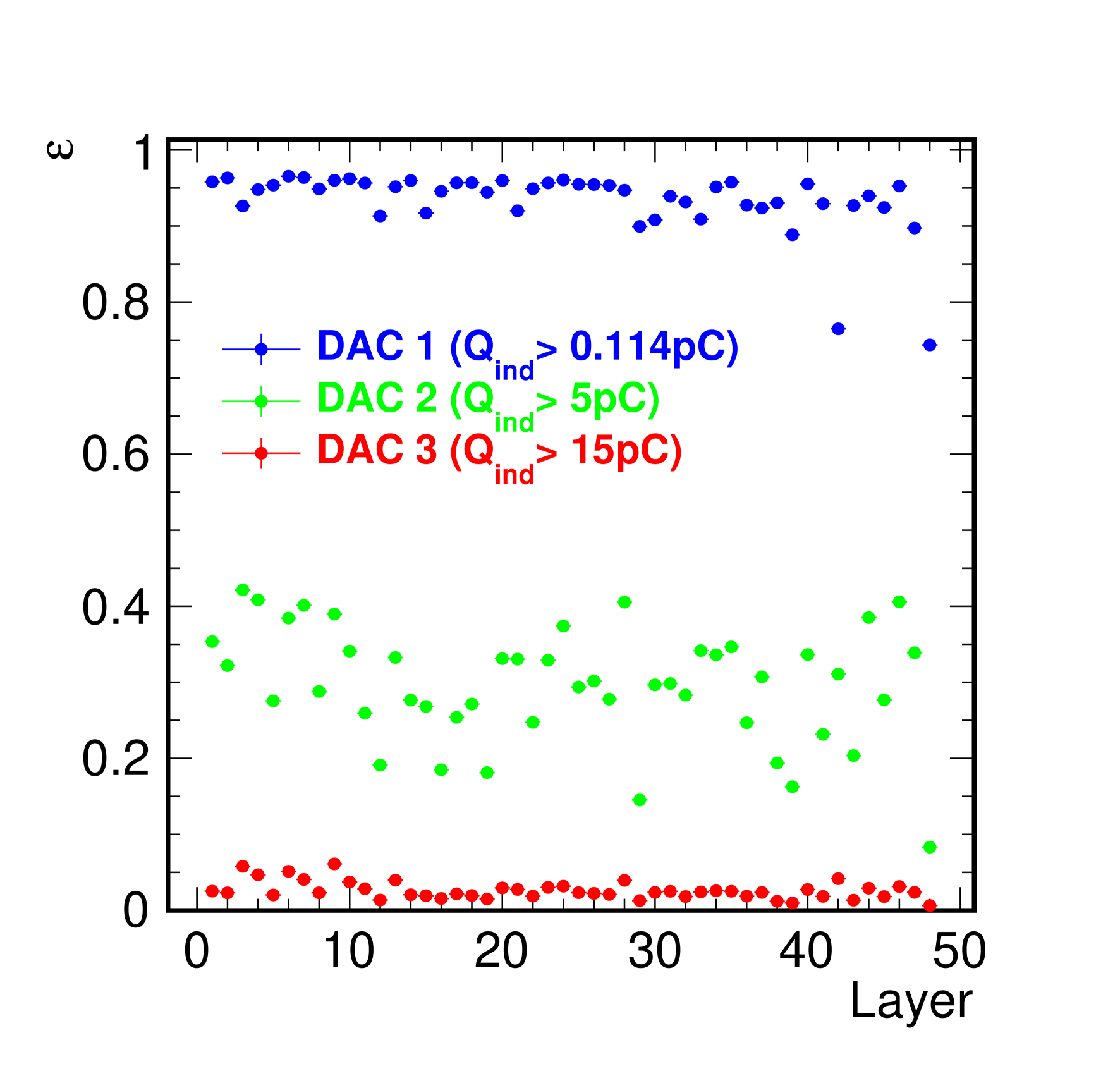
The findings in [1] from these tests demonstrated the SDHCAL's high efficiency and capability for detailed particle tracking. The prototype showed a linear response to different particle types and energies. The results from the SDHCAL prototype testing revealed significant insights into its performance and capabilities. Advanced methods were employed to analyse the data, including using fractal dimension as a novel approach to differentiate between electromagnetic and hadronic showers. For example, additional variables, such as fractal dimensions, were introduced to reduce electron contamination in the hadronic samples. The determination of this quantity involved the box-counting algorithm, which counts the number of hits while varying the virtual cell size, helping to distinguish between different types of particle showers based on their self-similarity. This method proved effective in refining the selection of hadronic showers, thereby enhancing the accuracy of the energy resolution studies.
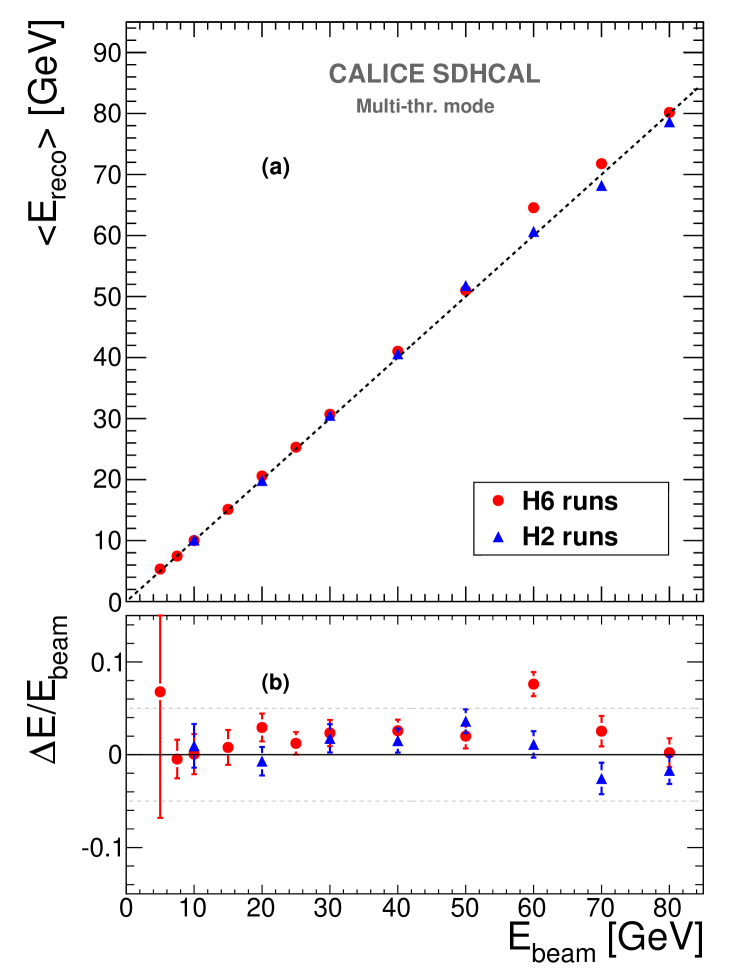
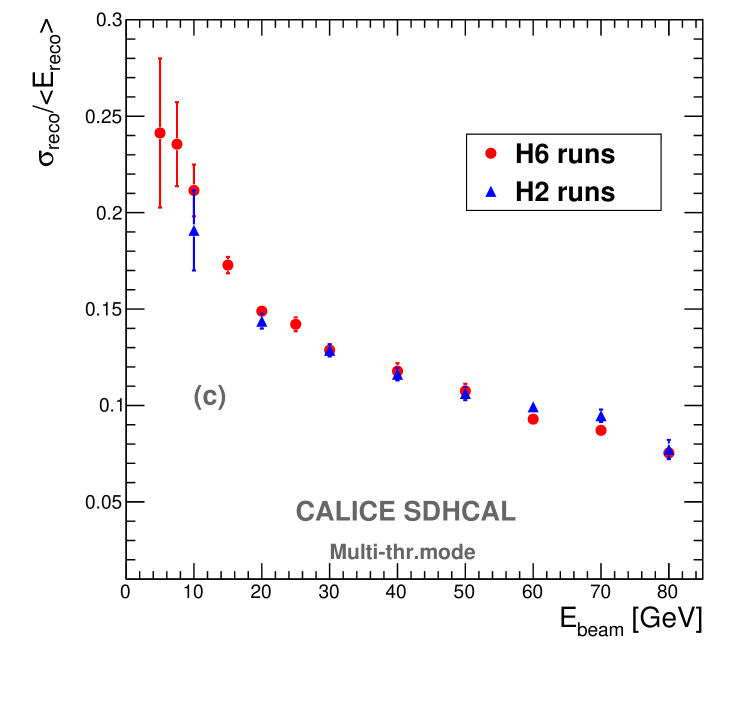
Mean reconstructed energy for pion showers as a function of the beam energy (a) of the 2012 H2 (blue) and the 2012 H6 (red) data. The dashed line passes through the origin with unit gradient. Relative deviation of the pion mean reconstructed energy with respect to the beam energy as a function of the beam energy (b) of the 2012 H2 (blue) and the 2012 H6 (red) data. The reconstructed energy is computed using the three thresholds information as described in section 6.2. (c) is the relative resolution of the reconstructed hadron energy as a function of the beam energy of the 2012 H2 (blue) and the 2012 H6 (red) data.
The resolution associated to the linearized energy response of the same selected data sample is also estimated in both the binary and the multi-threshold modes. The multi-threshold capabilities of the SDHCAL clearly improve the resolution at high energy (>30 GeV). This relative improvement which reaches 30% at 80 GeV is probably related to a better treatment of the saturation effect thanks to the information provided by the second and third thresholds. The energy resolution reaches 7.7% at 80 GeV. The exploitation of the topological information provided by such a high-granularity calorimeter to account for saturation and leakage effects in an appropriate way as well as the application of an electronic gain correction to improve on the calorimeter response uniformity are likely to improve the hadronic energy estimation and should be investigated in future works.